


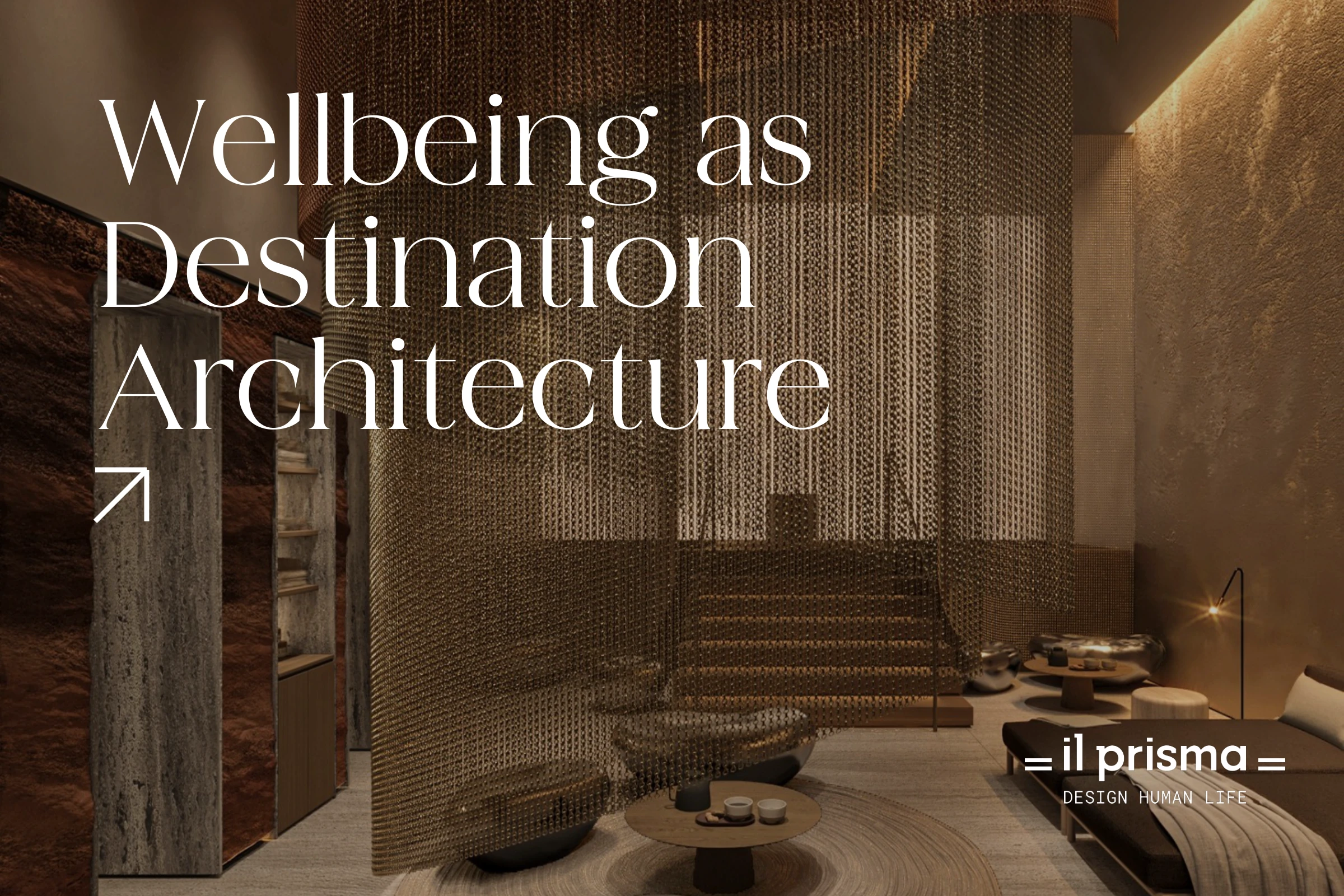
Il benessere come architettura di destinazione
Per secoli, ogni cultura ha avuto il suo modo di fare i conti con il corpo, con il tempo, con il bisogno di rigenerazione. I Romani nelle terme, i giapponesi negli onsen, i nordici nelle saune, gli egizi nei rituali di purificazione lungo il Nilo: ciascuno aveva capito, a modo suo, che il benessere non è un lusso ma un’esigenza fondamentale dell’essere umano.
Poi è arrivata la modernità e quella comprensione si è frammentata. Il corpo e la mente sono stati separati. La cura di sé è diventata un servizio, e il servizio è diventato un reparto dell’hotel, confinato in un piano seminterrato, accessibile su prenotazione.
Oggi, qualcosa si è ricomposto. Il benessere è tornato al centro non come moda, ma come orientamento profondo di milioni di persone che hanno smesso di rimandare la cura di sé a un momento più comodo.
Quelle persone viaggiano, e quando viaggiano cercano qualcosa di specifico: luoghi che sappiano sostenere quella pratica, non semplicemente illustrarla. Il viaggio è diventato il contesto privilegiato in cui il benessere si intensifica, si approfondisce, si trasforma.
Per continuare a leggere il whitepaper, clicca su “SCARICA IL WHITEPAPER” e registrati.
(en)
Can wellness reshape the way we design hospitality and the travel experience?
For centuries, every culture has had its own way of relating to the body, to time, and to the need for regeneration. The Romans had their thermal baths, the Japanese their onsen, Nordic cultures their saunas, and the ancient Egyptians their purification rituals along the Nile. Each, in its own way, understood that wellbeing is not a luxury, but a fundamental human need.
Then came modernity, and that understanding became fragmented. Body and mind were separated. Self-care became a service, and that service became a department within the hotel - confined to a basement floor and available by appointment.
Today, something has come back together. Wellbeing has returned to the center - not as a trend, but as a deep-seated priority for millions of people who have stopped postponing self-care until a more convenient time.
These people travel, and when they do, they are looking for something specific: places that can support that practice, rather than simply showcase it. Travel has become a privileged context in which wellbeing can be intensified, deepened and transformed.
To continue reading the white paper, click “DOWNLOAD WHITEPAPER” and register.
